369 Lives in the Crosshairs: The Brutal Cost of Gondalpura’s Fight Against Adani
Under Corporate Siege in Jharkhand
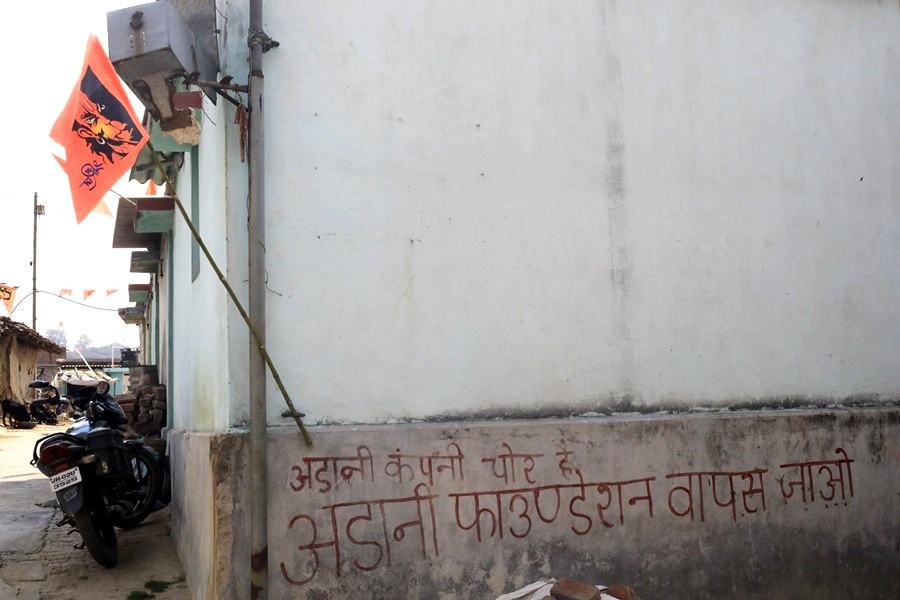
For 680 agonizing yet deeply inspiring days, the marginalized villagers of Gondalpura, situated in the coal-rich terrain of Jharkhand in eastern India, have stood as a human shield against the encroachment of corporate giants. They are fighting a desperate battle to defend their ancestral woodlands, their agrarian livelihoods, and their entire way of life from being swallowed by proposed coal mining projects. Foremost among dinner-table predators here is the Adani Group, whose slated open-cast project is officially named "Gondulpara"—a telling corporate misspelling of the very village they intend to wipe off the map.
But standing up to India’s most powerful conglomerate carries a heavy, state-sanctioned price. Legal actions unleashed by corporate agents have targeted the local community, with litigants naming a staggering 369 people in formal police complaints. This calculated judicial onslaught is designed to break the spirit of a community that simply refuses to let its homeland be turned into an ecological wasteland.
Lessons from History: Direct Action and Corporate Retribution
The high stakes of Gondalpura's resistance find a striking structural parallel in the annals of worker rebellions. In the second episode of filmmaker Ken Loach’s famous 1974 television series, "Days of Hope", which tracks the hardships of a British working-class family from 1916 up to the landmark 1926 General Strike, coal miners in Durham find themselves locked out by their employers. When military and police forces intercept vital food donations sent in solidarity by sympathetic transport workers in Liverpool, the miners reach a breaking point. They stage a revolt, taking members of the state forces hostage.
Faced with an absolute threat, the union debates their next move, eventually deciding on radical direct action. They threaten to blow up the entire colliery with dynamite, forcing the panicked mine owners to capitulate to their demands. But the workers' subsequent celebration is short-lived. The episode closes with a sobering dose of reality: state police swooping in to round up and arrest every single strike organizer, condemning them to long, grueling years behind bars.
While the residents of Gondalpura have not resorted to the explosive, armed measures of the Durham miners, they have been pushed into their own form of direct, unyielding community action.
Vikas: A Life Formed in Resistance
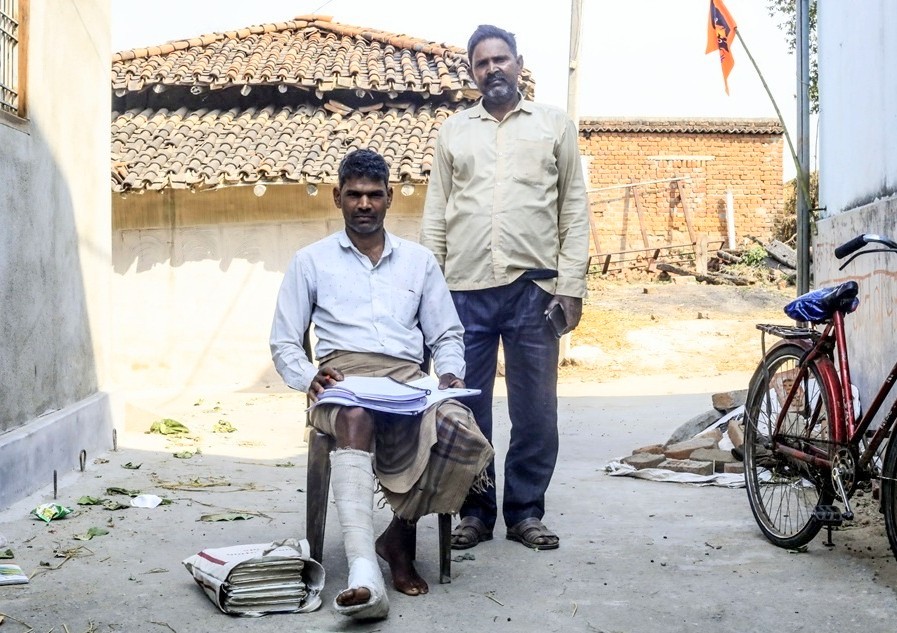
At the heart of Gondalpura's resistance is Vinay Mahto, affectionately known to everyone in the valley as "Vikas". By March 1, 2025, Vikas had acquired the grim honor of having the highest number of pending police cases lodged against him. He measures out his years not by standard calendars, but by the dates of his state-sponsored detentions. He recalls being arrested during the sacred festival of Raksha Bandhan in 2023, after which he was locked away in a prison cell for thirty-one hard days.
It has also become a point of pride on how many cases you have.— Adani Watch
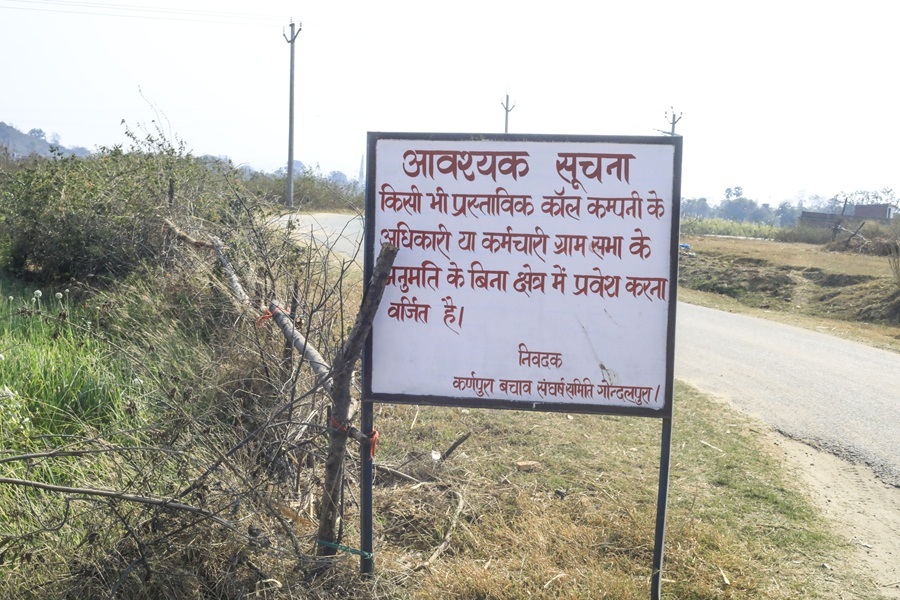
The reality of this pride, however, is painted in bruises. Vikas recounts how a local "daroga" (a police sub-inspector) violently assaulted him, slapping him repeatedly and striking his back with heavy wooden sticks. Though other villagers urged him to register a formal counter-complaint against the abusive officer, Vikas refused, dryly noting that "a fight is a fight." He reveals that the inspector pressured him to abandon his activism, urging him to stop educating his neighbors and instead secure a job working directly for the Adani Group. But Vikas has a knowing smile, aware that staying silent is an impossibility. He has been an active member of the Save Karanpura Valley Committee (Karanpura Bachao Sangarsh Samiti) since 2004, a community coalition that successfully ran more than thirty different extractive corporations out of their valley.
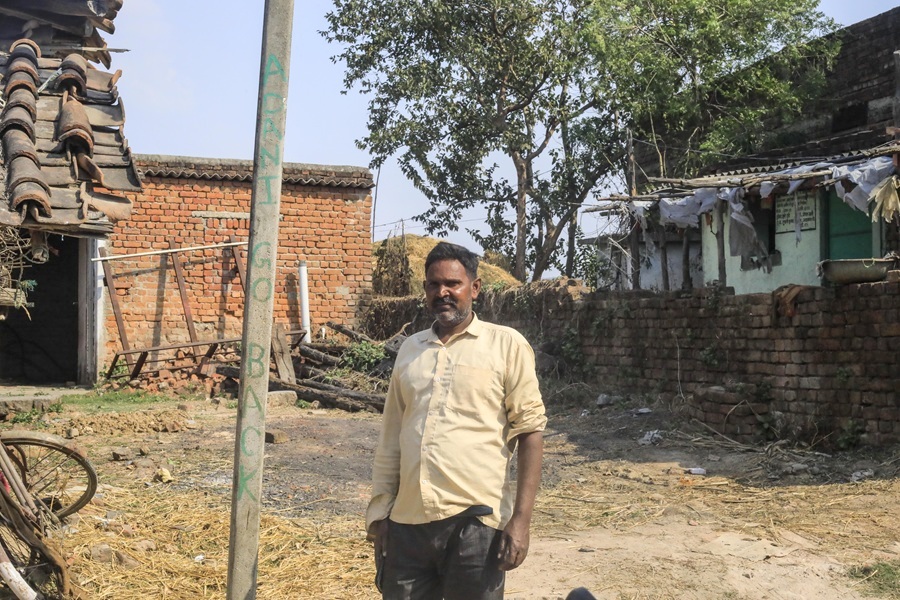
When asked how a group of forest-dwelling farmers can afford the astronomical legal fees to battle corporate-friendly courts, Vikas points to local solidarity. In Jharkhand, wherever there is an active earthen cooking stove or a family brewing traditional "hadiya" (local rice beer), households contribute twenty rupees every single month to keep their democratic legal defense fund alive.
Without hesitation, local residents name the most fearless land defenders who have stood on the frontlines: Krishna Rana, Chandan Kumar, and Ganesh Kumar Mahto alongside his wife. They estimate that between 100 and 150 local village women have also had their names written into police charge sheets.
The Legal Arsenal: Fabricated Cases and Weaponised Laws
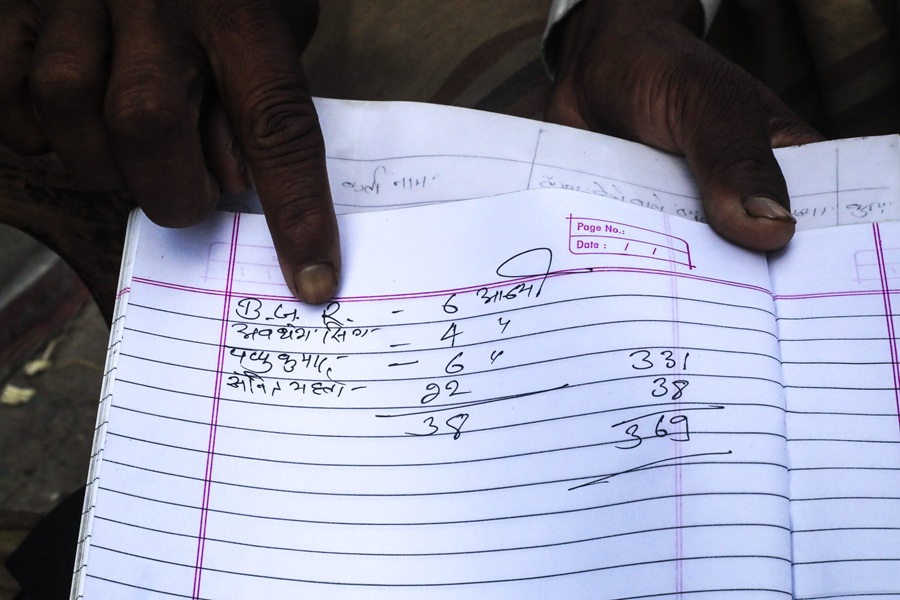
To track this systemic intimidation, the community maintains a detailed register of all legal threats. So far, 369 human beings have been named in First Information Reports (FIRs), which are formal police records of alleged offenses. What is highly revealing is that the 24 criminal cases filed against the villagers have not been directly lodged by the corporate mining giants themselves. Instead, they have been engineered by "dalaals" (corporate middlemen and touts) who stand to pocket major commissions if the land is successfully seized and handed over for mining.
The charges distributed across these 24 cases read like a list of major felonies. They include Section 191 of the Bharatiya Nyaya Sanhita (BNS) for rioting, Section 115 for voluntarily causing bodily harm, Section 324(5) for destroying property, and Section 109, which carries the extreme charge of attempted murder. The police have also dug up old 2023 cases under Section 34 of the colonial-era Indian Penal Code, a joint liability clause which states that if a group commits a crime with a shared intention, every single person present can be prosecuted as if they alone committed the entire offense.
In an incredibly cynical manipulation of social justice legislation, the police have even filed a case under the Scheduled Castes and the Scheduled Tribes (Prevention of Atrocities) Act of 1989. This historical law was originally enacted to protect India's most vulnerable marginalized groups from systemic violence. In this instance, a notorious corporate tout from Galli village, who happens to belong to a Scheduled Tribe, claimed that his neighbors attacked him and subjected him to discrimination simply because he had been visiting the corporate offices of the Gondalpura coal project.
There was never any beating up,— Arun Kumar, via Adani Watch
Another highly suspicious legal complaint was initiated by an outsider from Beheriabad in Uttar Pradesh, who works as a private security officer for the Adani Enterprises coal project. He claimed that a crowd of roughly 60 to 70 angry villagers held him hostage. Despite the chaotic nature of the alleged incident, this security guard filed a complaint claiming he could identify by name more than thirty of the protesting villagers, along with their spouses and relatives.
The Long History of Collective Victory
This is not the first time Gondalpura has had to stand before the gates of a prison to protect its soil. Back in 2007, a local resident named Manoj was sent to jail alongside neighbors from the adjacent village of Badam. They were protesting against the Eastern Minerals and Trading Agency, a private mining firm. Thanks to their uncompromising physical resistance, the villagers eventually defeated that project corporate-wide.
Deepak Das, a respected former village head (Sarpanch) of Badam who was arrested during that legendary 2007 campaign, warns that corporate strategies have merely become more deceptive.
now they don’t want to arrest anyone because we hear from the companies that they don’t want to alienate people. They want to win people over. But once mining starts, they will arrest everyone who opposed the projects.— Deepak Das, via Adani Watch
For local defenders like Arun and Vikas, this analysis is not just gossip, it is an imminent, terrifying reality. They are fully prepared for the state machinery to lock them away the second heavy machinery attempts to breach their borders.
Who is Really Breaking the Law?
The defenders of Gondalpura refuse to accept the frame that they are criminals. They are vocal about the systemic illegalities committed by the state-backed entities trying to dispossess them.
First tell us, who is violating the constitution? The companies or us? Who is not respecting the Gram Sabha (village council)? When the Gram Sabha has already said no to you, on what legal basis can you continue working here?— Vinay Mahto, via Adani Watch
The NTPC [National Thermal Power Corporation] will destroy hectares of forests, but when we cut a single tree, they come after us. Will they put NTPC-Adani in jail for destroying thousands of hectares of forests?— Vinay Mahto, via Adani Watch
The villagers are acutely aware that the destruction of their native deciduous forest is a disaster for local biodiversity and global climate stability. Vikas completely rejects corporate-style "compensatory afforestation," pointing out the absurdity of the state’s logic: if a massive conglomerate bulldozes their pristine forest and plants saplings hand-picked in some distant region, it does absolutely nothing to restore the destroyed ecosystems of Gondalpura.
They don’t even follow their own laws. The Land Acquisition Act says that you can’t mine in a region when the Gram Sabha says no. When 80% of the population says no. The Forest Department went to demarcate the forest in the night. Why? Because they knew they were doing illegal work. They were putting markers for forest clearance in the night because they were afraid of the people.— Vinay Mahto, via Adani Watch
Ultimately, the villagers of Gondalpura are throwing this fundamental question back at the politicians, corporate bureaucrats, and judges who seek to penalize them. In a democratic republic, who is the real lawbreaker? Is it the corporate-state alliance that destroys ancient forests, violates indigenous self-governance, and works under cover of darkness? Or is it a group of farming families who are putting their bodies, their freedom, and their lives on the line to defend the Indian Constitution?
As citizens, we must stand in absolute solidarity with Gondalpura. Their fight against coal is not just a localized protest, it is our collective battle for the ecological remaining future of India.