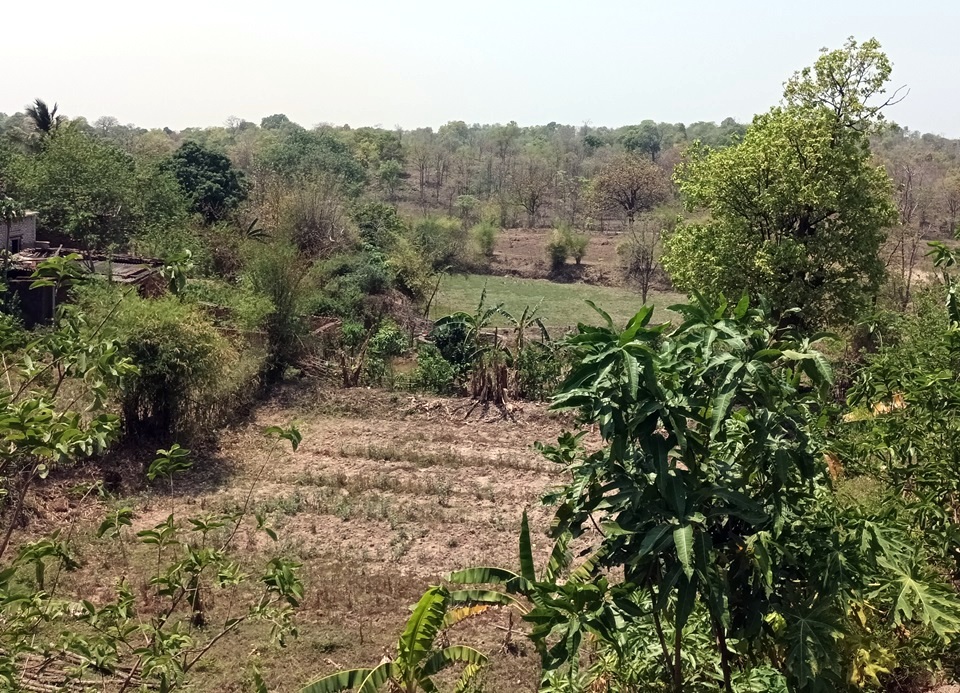
Adani’s Stealth Corporate Maneuvers Secure Large New Coal Lands in Odisha’s Elephant Country

The Opaque Power Move in Odisha
In September 2024, the coal-burning arm of the giant Adani Group executed a quiet corporate takeover of a tiny firm for a negligible sum of pocket change. Despite the insignificance of the price, this acquisition handed the billionaire-led conglomerate a massive prize: 405 hectares of strategic land in the eastern state of Odisha where building a massive coal utility is legally permitted. Merely three months later, Adani Power filed an application seeking environmental clearance to erect a colossal 2,400 megawatt (MW) coal power plant on this very block of land, marking yet another major expansion in the ever-growing thermal empire being built by the world's most aggressive private developer of coal.
Nilanchal Thermal Power Project: Key Facts
- Project Name: Nilanchal Thermal Power Plant, formerly known as KVK Nilachal Power
- Corporate Developer: Orissa Thermal Energy Private Limited, a fully-controlled subsidiary of Adani Power
- Site Location: Kandarei, Khanduali, Rahangol, and Dalua villages, situated in the Cuttack district of Odisha
- Proposed Generation Capacity: 2,400 MW (composed of three distinct units of 800 MW each)
- Current Status: Seeking terms of reference, the official guidelines set by the government for performing an environmental study
- Total Projected Cost: Rs 27,438 crore, equivalent to roughly US $3.1 billion
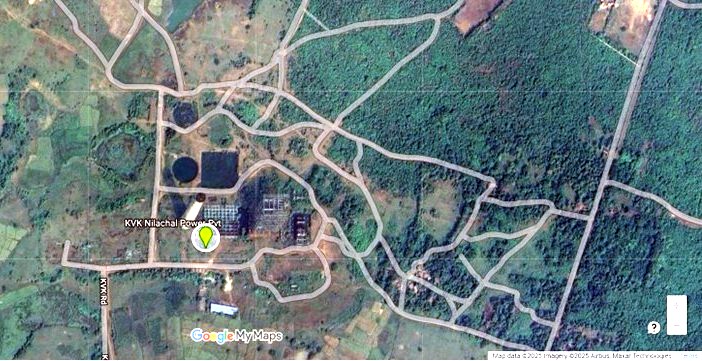
The corporate transaction took place on September 27, 2024. Adani Power, India's largest private coal generator, took over a modest, family-run company called Orissa Thermal Energy Private Limited. Established in 2020 within Ahmedabad, the very city that operates as the Adani Group's corporate headquarters, the firm originally traded under the name Padmaprabhu Commodity Trading. When Adani bought it out, the company registered a tiny share capital of just Rs 100,000, which is worth about US $1,150.
While the financial price tag of acquiring this front firm was practically nothing, the strategic payoff was monumental. By purchasing the enterprise, Adani Power took control of 405 hectares of land in eastern India, providing them with a ready-made canvas for a new polluting power hub.
Two years earlier, in 2022, Padmaprabhu Commodity Trading had won a bankruptcy auction to buy out KVK Nilachal Power. KVK Nilachal Power, which had been founded by an entrepreneur from southern India, was the original owner of this Odisha property. The company had originally hoped to construct a major coal-burning plant during India's late-2000s coal rush. However, the original project collapsed under intense pressure from local agriculturalists and conservationists, who warned of the severe damage to the local forests. The project was also dragged down by allegations of using illegally diverted money traced to a major financial fraud scandal. The company eventually fell into default, failed to pay back its banks, and was forced into liquidation, which allowed Padmaprabhu to scoop up the carcass.
Now, Adani Power intends to construct a massive 2,400 MW coal utility on this very land. This is more than double the size of the 1,050 MW project originally proposed by the previous owners. Adani plans to inject a colossal Rs 27,438 crore, around US $3.15 billion, into this development, which has been named the Nilachal Power Plant. It initiated the environmental permitting process in December 2024. By January 2025, an advisory committee under India's environment ministry cleared the company to move forward with its Environmental Impact Assessment, which represents the first administrative hurdle in securing full approval.
Even though the site's previous owners failed to overcome intense ecological objections, Adani seems entirely self-assured that it can bypass these hurdles. It is pushing hard to establish one of its largest coal projects in a region renowned for its rich biodiversity.
This project is a crucial piece of Adani's larger blueprint to nearly double its coal power fleet to 30,000 MW by the year 2031, driven by a desire to exploit India's rising electricity use and a federal policy framework that heavily encourages the burning of coal as the primary power source. This acquisition also highlights the quiet, stealthy strategy Adani Power routinely uses to build up its coal portfolio, similar to its massive expansion at Kawai. The conglomerate made absolutely no public announcements outlining its plans for the Nilachal plant. The takeover of Padmaprabhu was only noted in a routine disclosure to stock exchanges and quietly mentioned inside its quarterly financial records released on January 29, 2025. The only real evidence of this massive project was buried deep within the application database on the environment ministry's website.
A High Ecological Toll: Elephant Corridors and Stolen Farmlands
Inside the environmental application submitted by Adani, the developer admits that the proposed site is wrapped in natural forests, with the nearest woodland sitting just 700 metres from the property line. Furthermore, the plot lies only 3.2 kilometres from the transition zone of the Kapilash Wildlife Sanctuary, an essential protected sanctuary dedicated to the survival of elephants.
Running this facility will require a staggering 9.67 million tonnes of coal on an annual basis. Adani Power plans to feed this massive fuel requirement from its sister company's proposed extraction projects: the Bijahan, Gondbahera Ujeni, and Gondulpara mining operations. These proposed coal mines are being developed by Adani Enterprises, the conglomerate's mining arm. While Adani Enterprises is currently trying to secure environmental permits for these mines, the projects have run into furious resistance from local movements and environmental groups who are fighting to protect their homelands.
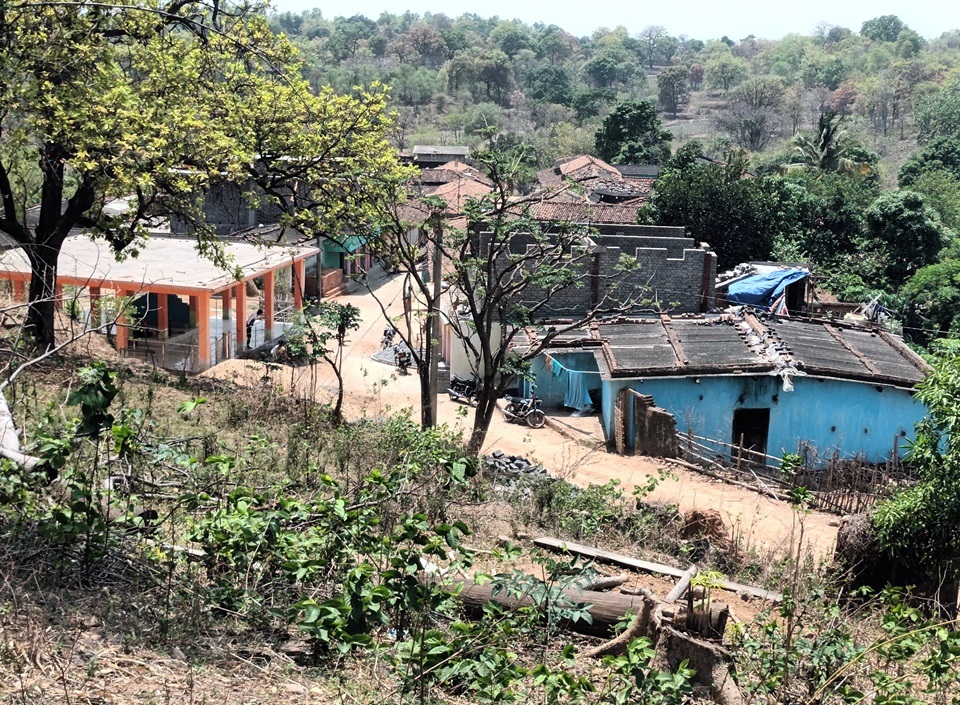
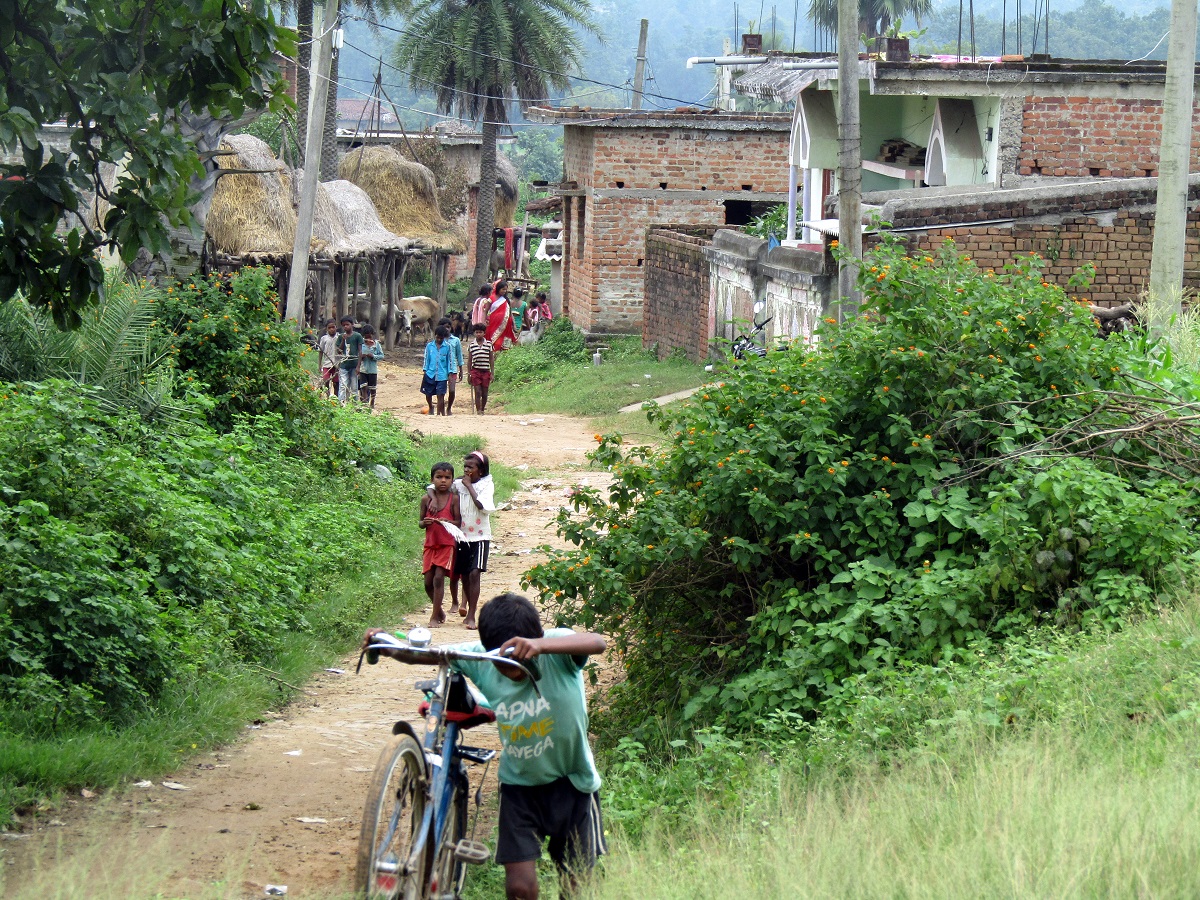
On January 24, 2025, the central environment ministry's specialist committee for coal-based energy projects evaluated Adani's environmental application. The committee recommended that the ministry grant the developer the right to run an Environmental Impact Assessment, the inaugural administrative step. While the formal ministry approval was still pending as of February 18, 2025, such expert panel recommendations are almost always rubber-stamped.
Once this environmental assessment is finalized, the Odisha state government is legally required to hold a public consultation with the affected local communities. These proceedings will then be recorded and sent back to the central expert committee for a final decision. Historically, this public consultation is where local residents find their strongest voice to oppose destructive developments. As a result, the upcoming months will be critically watched, especially given the project's highly controversial history.
A Sordid History of Local Opposition and Financial Scandals
In 2012, the Orissa High Court stepped in and blocked the original project following a lawsuit filed by a local citizen group. The petition pointed out that the construction was starting without required forest permissions and raised serious alarms about its proximity to the elephant sanctuary. The legal ruling required the owners to secure clearance from the National Board for Wildlife. In response, the power company tried to exploit a loophole in environmental regulations. They argued in court that because the elephant sanctuary was officially declared in 2011, while their project had been proposed prior to that year, the wildlife protection laws should not strictly apply to their development.
Despite these clear dangers, the coal project enjoyed full backing from the Odisha state government, which was then led by the Biju Janata Dal (BJD). The state's own wildlife board, which is supposedly responsible for vetting developments that threaten native fauna, gave the project a green light. Even as they claimed the coal plant would have no negative impact on the local fauna, the state wildlife board set down several conditions to protect wild elephants. These conditions included planting trees to serve as elephant food and building underpasses. However, these underpasses were likely designed only for immediate project roadways, doing nothing to mitigate the broader, heavy traffic risks brought by such industrial growth.
By 2013, with the project completely jammed in court, small-scale farmers who had been forced to give up their lands petitioned the state chief minister to return their fields. Instead of helping these farmers, the chief minister doubled down on the coal project in 2014, writing directly to the federal government to demand that they grant the vital wildlife clearance to the private developer.
Long before that, in 2009, the high court had already frozen construction on entirely different grounds. A lawsuit had accused the developers of funding the project using money stolen as part of the infamous Satyam Computers corporate fraud, where the head of a major IT firm admitted to massive embezzlement. A firm controlled by the family of the Satyam founder was heavily involved in the power plant development.
Although direct court records of these proceedings are no longer accessible on the High Court's database, a 2016 status report published by India's Central Electricity Authority confirms that the judicial freeze remained active until May 2015. Construction briefly resumed around March 2016, but subsequent government briefs indicate that the project stalled once more. By 2020, under pressure from unpaid creditors, the bankrupt power company was legally ordered to undergo liquidation under the national insolvency system.
The Shadowy Intermediary: Who is Padmaprabhu?
This stalled project eventually found its way into Adani's hands through an unusual chain of events. The liquidation process occurred via a public auction, which was repeatedly delayed throughout 2021, with corporate liquidators blaming the pandemic. The assets were finally sold in a 2022 auction to Padmaprabhu Commodity Trading. The company later changed its name to Odisha Thermal Energy Private Limited, and on September 27, 2024, it became a wholly-owned subsidiary of Adani Power. This corporate marriage was revealed through a mandatory regulatory filing with the stock exchanges. Interestingly, the filing painted Padmaprabhu as a simple commodity trading enterprise. The only hint of its coal-burning ambitions was a brief line stating that the acquisition was meant to build infrastructure and increase capacity on the acquired land. The exact same language was repeated in the quarterly earnings statement released on January 29, 2025, keeping the move extremely low-profile. No mention of the acquisition was made in Adani's primary investor presentations or its media releases.
In those financial disclosures, Adani Power confirmed that it paid a pocket-change sum of just Rs 100,000 to buy the company. This ridiculously low price tag for a firm holding 405 hectares of prized land raises serious doubts about the actual function of Padmaprabhu Commodity Trading in this transaction.
Official auction records show that the minimum bidding price for the plant's assets was initially set at Rs 103 crore, and was later marked down to Rs 76 crore, which was the final price Padmaprabhu paid.
It remains a mystery why Adani Power did not participate directly in the original bankruptcy auction. In its stock exchange filings, Adani Power asserted that Padmaprabhu was not a related party. According to corporate registry filings, Padmaprabhu lists its directors as Kushal Mohit Shah and Kinnari Mohit Shah, with Kushal serving as the managing director. Both individuals also hold directorships in financial and cement companies operating out of Ahmedabad.
There is virtually no public data concerning this pair, aside from a single Facebook post highlighting community charity work done by a couple sharing those exact names in Ahmedabad. Whether the transfer of this massive industrial property to Adani Power for a nominal fee of Rs 100,000 constitutes another form of charitable work remains an open question.
Whatever the story behind the transaction, the reality remains unchanged: Adani Power now has another massive coal facility under its control. At 2,400 MW, this plant will rank as the fourth-largest coal-burning facility in Adani's operating fleet, sitting right behind its plants in Mundra, Tiroda, and Singrauli. This takeover shows how Adani exploits the bankruptcy system to rapidly grow its coal empire, while the bizarre intermediary role of Padmaprabhu exposes the highly calculated, opaque, and hidden methods the conglomerate uses to expand behind closed doors.