600,000 Trees and a Tribal Homeland: How Bureaucracy Cleared Adani’s Singrauli Coal Mine
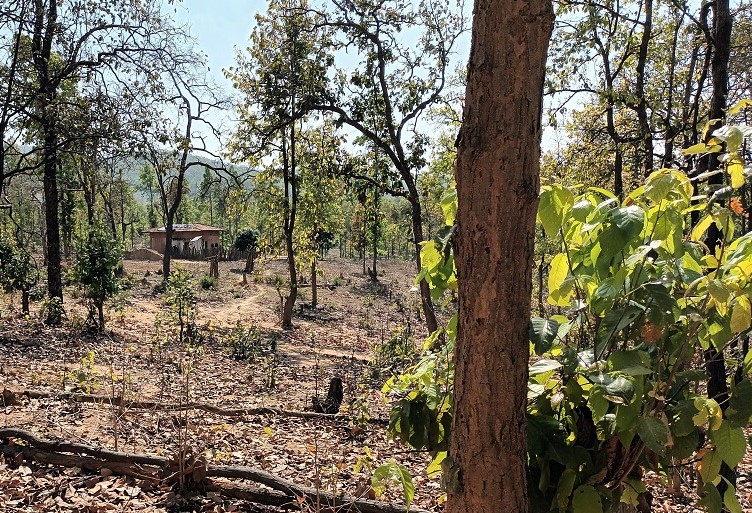
A Forest Sacrificed on a Technicality
In a deeply disappointing turn of events, the highest court of India has turned its back on one of the country's most ecologically sensitive zones, sacrificing an ancient forest on the altar of state bureaucracy. On 21 May 2026, a Supreme Court bench comprising Justices P. S. Narasimha and Alok Aradhe declined to interfere with the environmental and forest clearances granted to a massive coal block project in Madhya Pradesh’s Singrauli district. The project is owned by Adani Group’s subsidiary, Mahan Energen Limited, and is being operated under its associate company, Stratatech Mineral Resources Private Limited.
The apex court's refusal to intervene was not a verdict on the environmental or human merits of the case. Instead, it was a decision based entirely on a bureaucratic deadline. The court upheld an April 2026 order by the National Green Tribunal, which had dismissed a petition filed by environmental activist Ajay Dubey. The tribunal threw out the case because it was filed 259 days after the approvals were issued in May 2025, which exceeded the strict 90-day limitation period prescribed under the National Green Tribunal Act. Even as Dubey’s counsel urged the Supreme Court to exercise its extraordinary powers under Article 142 of the Constitution to protect the environment, the bench refused, telling him he could pursue other legal avenues instead.
The dismissal has provoked deep outrage among local communities and environmentalists. Activist Ajay Dubey expressed his devastation online, pointing out the absurdity of prioritizing bureaucratic deadlines over the life of our planet: "So now, 6 to 7 lakh trees will be chopped down just because of a technical time limit rule?"
The Devastating Ecocidal Cost of 'Development'
The Dhirauli coal project is a Rs 2,800 crore, or roughly 340 million US dollars, venture located within the Singrauli coalfield. The mine is designed to produce 6.5 million tonnes of coal per annum, utilizing 5 million tonnes of open-cast mining and 1.5 million tonnes of underground mining. Unlike commercial mines, this is a captive project, meaning that all coal extracted will be shipped directly to feed Adani Power's captive generation units, insulating the company from open market supply disruptions and price volatility.
To facilitate this corporate fuel supply, the final Stage-II approval granted by India’s Ministry of Environment, Forest and Climate Change has cleared the diversion of 1,397.54 hectares of dense, ancient tropical dry deciduous forest. This land-use change will lead to the clearing of approximately 600,000 old-growth trees, including invaluable species like Sal and teak, which have stood and sustained this local ecosystem for more than five centuries.
The ecological fallout of this clearing is staggering. The forest land cleared for the project directly overlaps with a vital migratory elephant corridor that allows elephant herds to move and mix between Madhya Pradesh, Chhattisgarh, and Jharkhand. Furthermore, the coal block is located just over 10 kilometers away from the Sanjay Dubri Wildlife Sanctuary and Tiger Reserve, a crucial sanctuary for endangered leopards, bears, hyenas, and wolves. Stripping these dense forests risks severing wildlife paths, fragmenting animal populations, and triggering massive human-elephant conflicts.
A Human Disaster for Forest Communities
For the indigenous tribal families living at the edge of the forest, including Gonds, Khairwars, Agarias, and particularly the Baiga community, the forest is not merely trees; it is their home, their kitchen, and their temple. The forest provides crucial non-timber resources, such as Mahua flowers for food and fermentation, and Tendu leaves used for wrapping traditional beedi cigarettes, which the communities harvest to generate essential household income.
The Baigas are recognized as a Particularly Vulnerable Tribal Group in other parts of India, but the Madhya Pradesh government has consistently refused to grant them this protective designation in Singrauli, leaving them highly exposed. While the forest department claims only 49 families have recognized legal rights under the Forest Rights Act, the ground reality of dependency is vastly wider, as hundreds of families rely on this land for their daily survival.
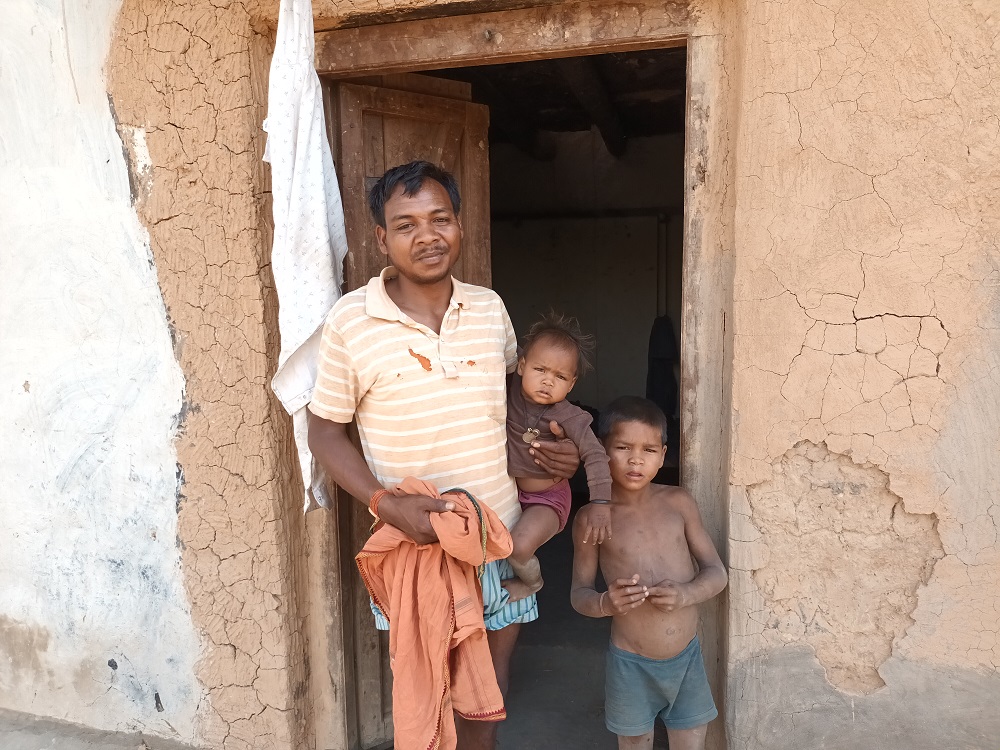
"Our children do not go to school... We do not seek employment outside these forests. These forests provide for all our needs. For generations, we have lived in these forests, practising small-scale farming. We drink water directly from the streams that flow through the forest. Our relationship with the trees and wildlife of these forests is fundamental."— Adani Watch
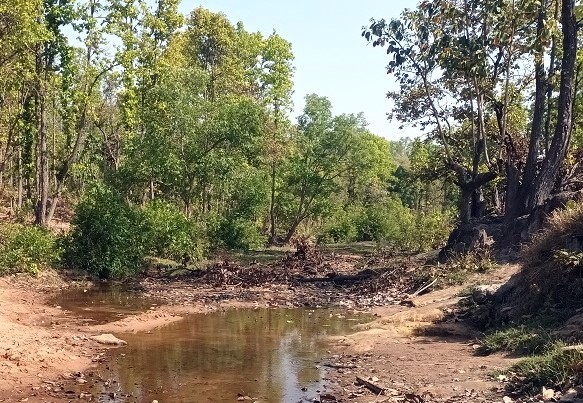
Local leaders have warned that cordoning off the forest and building mining infrastructure will block historical footpaths and completely cut off tribal households from surrounding towns. Furthermore, the clearing threatens the forest’s delicate water network. Pristine streams, like the Hardul stream, flow directly through the lease area. Tribal families rely on these clean water bodies for drinking, household needs, and watering their livestock, and they fear the mine’s excavations will block or contaminate these vital water sources.
The Blackout Zone: Police Protection and Fabricated Consent
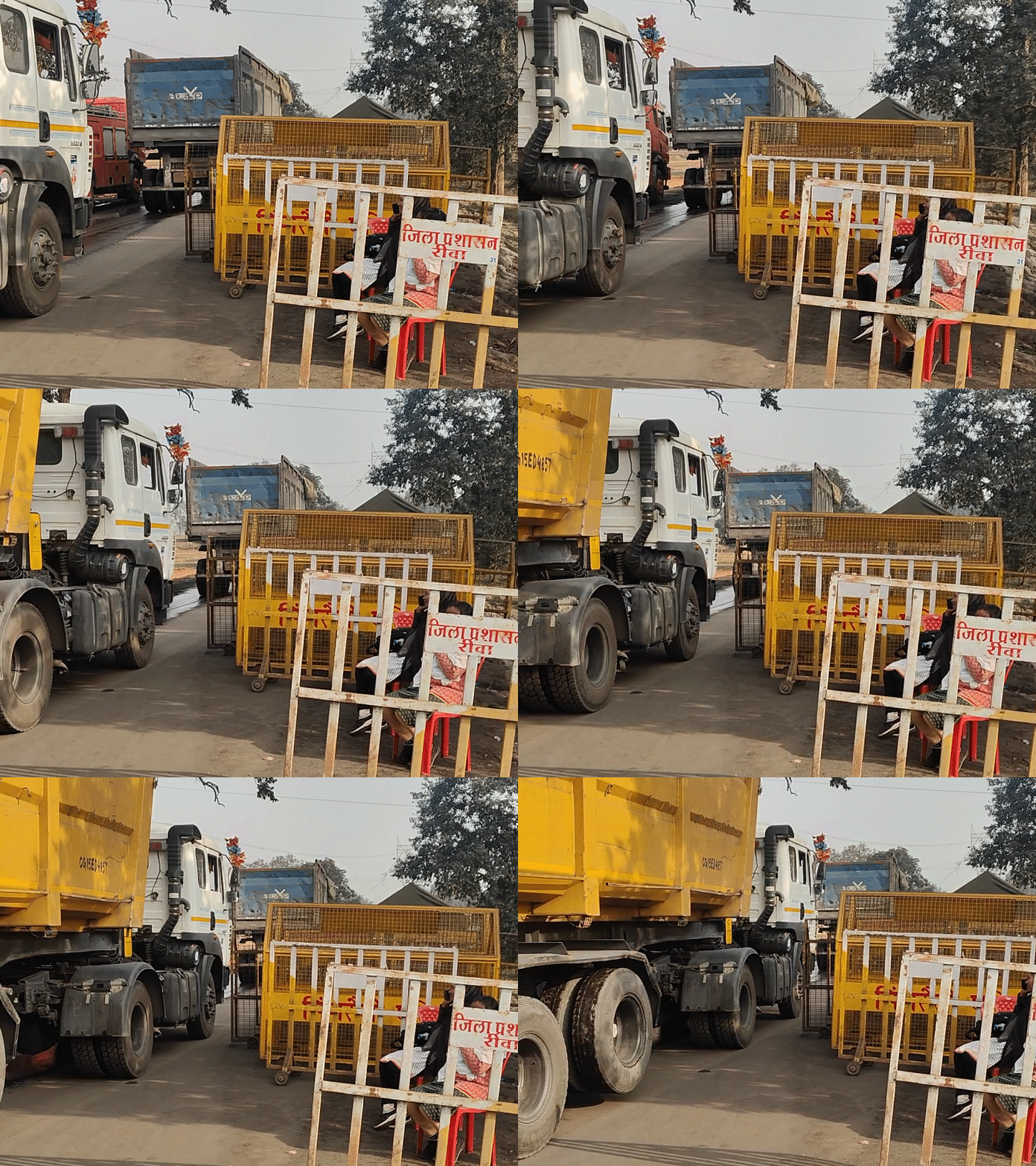
As the state moved to start the tree felling in mid-November 2025, it did not rely on public consensus. Instead, the local administration deployed up to 1,500 heavily armed police officers to enforce a complete blockade over five road points leading into the forest. Prohibitory orders under Section 144 were declared, public assemblies were banned, and independent journalists and outsiders were strictly barred from entering the zone to prevent the reality of the forest clearance from being documented.
"With all official routes blocked, the reporters took a jungle path. After 60 km by road and a long walk through rough terrain, they reached Basi Berdah village late at night... At 3 AM, the team walked towards the felling area. After 5 km of trekking, they reached a site where thousands of large trees lay cut."— Bhaskar English
Tribals who attempted to stand up for their lands encountered brutal corporate-state defense tactics. Local police filed multiple criminal complaints for "disturbing the peace" against 18 villagers, forcing them to sign bonds of Rs 25,000. Land activist Akhilesh Shah, who has been a prominent voice in the protest, was slapped with three separate FIRs, jailed for three days, and physically assaulted by the police to force his compliance. Another villager, Roopnarayan Singh, recounted how the district administration and local political elements coerced villagers into signing consent documents inside the Collector's office under threats of fabricated criminal charges.
"This is my son Vikram. He is two years old. Since he was four months old, we have been fighting to save our village and our forest. I am fighting for my child, and for the generations to come. This forest has given us tribals so much. The government is getting the forest cut down at gunpoint."— Bhaskar English
Political Resistance and State Evasion
The state's heavy-handed tactics also targeted opposition political figures who tried to show solidarity with the villagers. Congress leaders like Kamleshwar Patel and Vikrant Bhuria were arrested or detained alongside dozens of party workers under Section 151. On 10 December 2025, State Congress President Jitu Patwari and a fact-finding team staged a two-hour road blockade near Dhirauli village when they were stopped by police, and were eventually allowed to inspect the clearing only while under strict police escort.
The political tension reached a boiling point in the Madhya Pradesh Legislative Assembly. On 5 December 2025, the final day of the winter session, Assembly members from the opposition Congress staged a walkout. Leader of the Opposition Umang Singhar and MLA Jaivardhan Singh accused the BJP state government of prioritizing corporate interests over tribal rights, and of misleading the house on the protective status of the area under the Panchayat (Extension to Scheduled Areas) Act (PESA), which mandates village council consultations before land acquisitions. In response, State Minister for Forests Dilip Ahirwar insisted that the cutting was perfectly legal and claimed that compensatory tree planting of equivalent land would be carried out in distant districts like Agar-Malwa, Sagar, Raisen, and Shivpuri.
But this state defense exposes the deep flaws of India’s compensatory afforestation policy. In exchange for cutting down a contiguous, rich 500-year-old old-growth ecosystem, the corporate operator is permitted to fund monoculture plantations in distant districts, hundreds of kilometers away. These distant monoculture plots can never replace the complex biodiversity, species variety, or local hydrological value of the forest being lost in Singrauli. Furthermore, federal environment ministry records show that some of the patches selected for replanting are situated on earthen dams unsuitable for deep root systems, or directly conflict with established tiger corridors.
The Fight is Far From Over
The approval of projects like Dhirauli exposes a painful double standard in India's development story. While India makes ambitious commitments on global platforms to achieve net-zero status by 2070 and transition to clean energy, its domestic policy continues to establish regional "sacrifice zones," destroying precious native forests to satisfy the needs of private power companies.
Following the May 2026 Supreme Court decision, the primary legal path to invalidate the forest clearances under bureaucratic limitations has been blocked. However, as senior Congress leader and former Union Environment Minister Jairam Ramesh noted, the Supreme Court's permission for the petitioners to withdraw their plea and pursue other legal remedies means key environmental questions remain open. The legal fight can—and must—continue in the high courts. We must continue to stand with communities like Basi Berdah, whose brave resistance against administrative tyranny and corporate greed shows us that when a planet's survival is compromised for corporate interests, choosing silence makes us complicit.